


UK Parliament Urged to Tackle Root Causes of Aircraft Cabin Fume Events Aether Shield Strategic Initiative presents compelling evidence to APPG on Cabin Air Quality, highlighting regulatory blind spots, legal precedents from France, and the “normalization of deviance”London, 23 June 2026
In a powerful evidence session before the All-Party Parliamentary Group (APPG) on Cabin Air Quality, the AVSA Aether Shield Strategic Initiative called on Parliament to address the causes of aircraft cabin fume events rather than merely managing their symptoms.
The presentation, titled “Fume Events — Addressing the Cause, Not the Symptom”, argued that cabin air contamination from bleed-air systems is not a series of isolated incidents but a structural problem embedded in certification rules, fragmented regulation, and organizational drift.
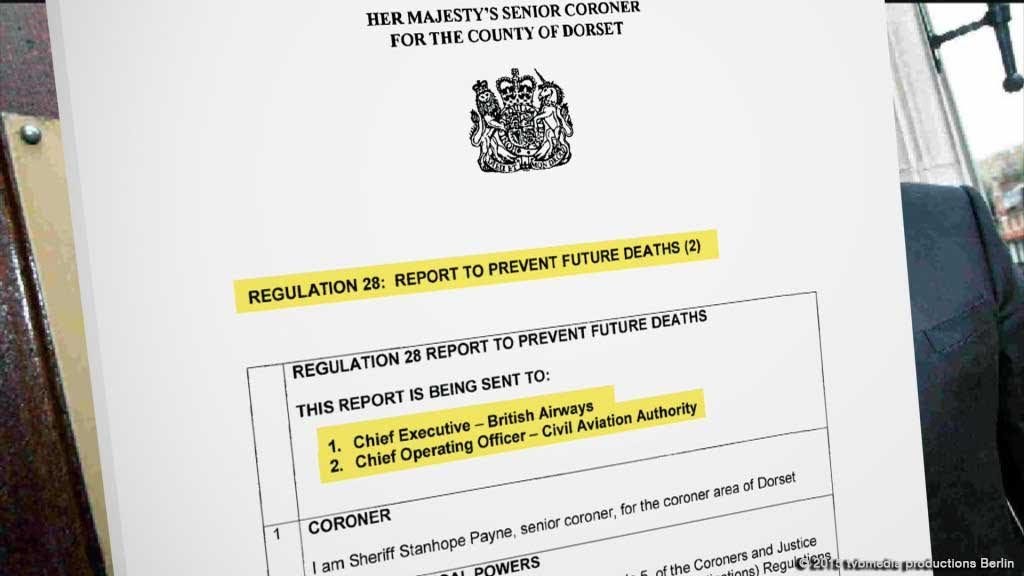
French Courts Lead the Way
The session opened with powerful legal context. In December 2025, the Toulon Judicial Court (Pôle Social) issued what appears to be the world’s first definitive ruling recognizing Aerotoxic Syndrome as an occupational disease resulting from chronic exposure to aircraft cabin contaminants.
A French criminal court-appointed expert investigation established that contamination occurs through both inhalation and dermal contact (aerosols and contaminated surfaces). The ruling does not require proof of a single acute “fume event” — precisely the blind spot the current certification system relies upon.
Three additional non-chronic cases have been confirmed, and one major UK airline was found guilty of “inexcusable fault.”
Earlier rulings in Bordeaux (2023) and the Toulouse Court of Appeal (April 2025) paved the way. Recognition is already advancing in French courts while regulators lag behind.
Independent German Authority Confirms the Design Flaw
The German Federal Bureau of Aircraft Accident Investigation (BFU), a neutral state body, reached the same conclusion in its study “Study of Reported Occurrences in Conjunction with Cabin Air Quality in Transport Aircraft” (BFU 803.1-14).The BFU found that certification under CS-25.831 only requires air to be “free from harmful or hazardous concentrations” of CO and CO₂. Engine-oil pyrolysis products — the actual compounds involved in fume events — are never systematically tested. Compliance can therefore be achieved while the air remains unmonitored for the substances that matter.
Four Structural Blind Spots in the Rules
The presentation identified four critical flaws in the current regulatory framework:
Certification tests the wrong things — Chronic health effects are explicitly declared out of scope for type certification.
Crew impairment is pre-accepted — Short of full incapacitation, impairment is classified as a “Major” risk (accepted at < 10⁻⁵ per flight-hour).
The measurement net is too small — Compliance relies on just 9 marker substances (BFU/SAE APR 4418), while other standards list 19–21. Hydraulic fluids are not even treated as a contamination source.
The “Houdini Effect” — Toxic compounds can be declared, consumed, and inhaled yet remain statistically invisible because the testing protocol never looks for them at the moment they occur.
The Normalization of Deviance
Drawing on sociologist Diane Vaughan’s seminal work (The Challenger Launch Decision, 1996), the presentation explained how organizations gradually redefine known anomalies as “normal” until disaster strikes.The same pattern seen in the Space Shuttle Challenger (O-ring erosion accepted flight after flight) and Columbia(foam strikes reclassified as a maintenance issue) is now visible in aviation:
Fume events logged as “isolated.”
No standardized post-event air sampling.
Ad-hoc crew medical follow-up.
In-flight incapacitations treated as anecdotes rather than data.
This slow drift — not malice, but bureaucratic acceptance — moves organizations from the “Good” (transparent problem-solving) toward the “Bad” (complacency) and potentially the “Ugly” (active denial and gaslighting).

The GBU Index: A Stark Metaphor
Using the Apollo 13 crisis as a three-act metaphor, the presentation contrasted:
The Good (NASA 1970): Immediate transparent acknowledgment, cross-functional mobilization, innovation beyond procedure, and systemic learning.
The Bad: Complacency — treating signals as familiar sensor faults, sticking rigidly to checklists, and classifying incidents as “exceptional.”
The Ugly: Active denial — reconstructing telemetry, silencing engineers via NDAs, gaslighting affected crew (“your fatigue is psychosomatic”), and protecting reputation over safety.
A striking GBU Index graphic placed organizations on a scale from 5 (Good) to 1 (Ugly), with the clear message: “Let’s get everyone home safe.”
One Problem, Six Owners — And No One Owns the Whole
Cabin air quality falls between regulatory silos:
Crew chronic health (HSE / CAA aeromedical / employers)
Acute in-flight impairment (CAA / EASA / AAIB)
Type certification (CAA / EASA)
Data & reporting (CAA / EASA)
Liability & compensation (Montreal Convention / employer liability)
Insurance
The result: Aerotoxic syndrome is not a regulatory orphan by accident — it is one by construction and by normalization of deviance.
What Only Parliament Can Do
The session ended with six concrete requests that sit above the regulators:
A. Statutory duty to cooperate on cabin air (bridge CAA, HSE, and UKHSA)
B. Re-examine certification scope to include chronic health and the full list of substances (CS-25.831)
C. Legally recognise Aerotoxic Syndrome as an occupational disease (following the French precedent)
D. Introduce a standardised post-event air-sampling protocol for engine-oil and hydraulic-fluid contaminants
E. Create a protected crew and passenger health register with medical follow-up protocol
F. Protect whistle-blowers and occupational physicians from institutional pressure
A Clear Choice
The AetherShield presentation made one central point: the system does not lack data because fume events are rare — it lacks data because the system is designed not to see them. Parliament now has the opportunity — and the unique constitutional position — to break the cycle of normalization of deviance and fragmentation that has allowed this issue to persist for decades.
The evidence is clear. The legal precedents exist. The regulatory blind spots have been independently documented.
The question for Parliament is no longer whether action is needed, but what only Parliament can do to ensure that the next generation of flight crew and passengers does not inherit the same invisible risk.
Court Rulings & AVSA Press Release
Special thanks to the creator, who expressis verbis granted permission to feature their work. All Rights © reserved June 23, 2026:
As always your work is brilliant Bee🐝